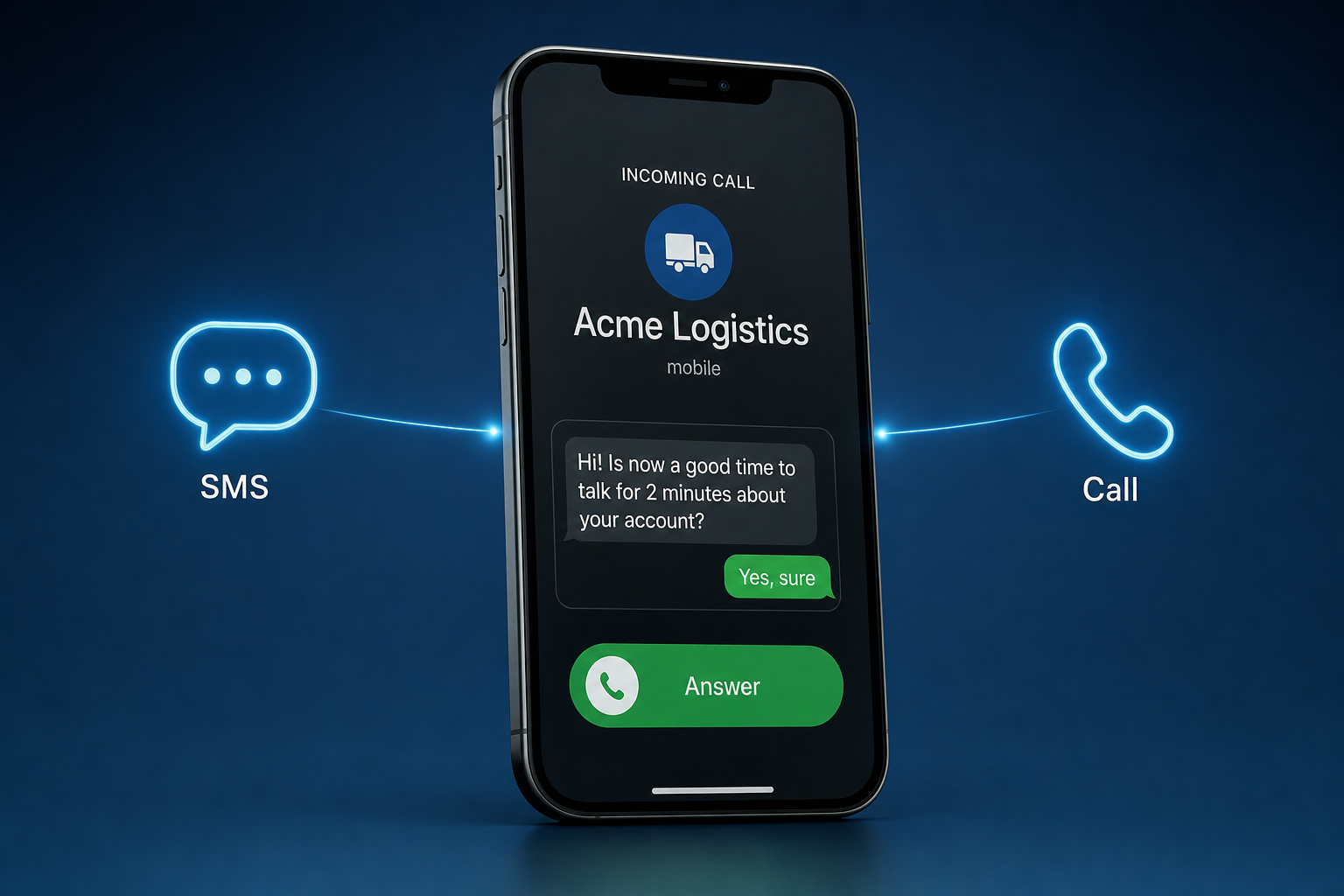
Something is shifting in enterprise SMS. The brands sending millions of messages a month are quietly walking away from 10DLC (10-digit long code) and toll-free numbers, and they're moving to dedicated short codes instead. At Tells, we've watched this trend accelerate through 2026, and the reasons are less about preference and more about basic math.
The 10DLC Promise vs. the 2026 Reality

When 10DLC launched, it was pitched as the responsible middle ground: registered, compliant, and cheaper than short codes. For low-volume use cases, that's still true. But for brands sending hundreds of thousands of messages a month, the cracks have become impossible to ignore.
Three forces are converging to push high-volume senders off long codes:
- Aggressive carrier content filtering that silently drops messages without notification
- Restrictive throughput caps measured in single-digit messages per second
- Unpredictable deliverability on shared infrastructure that varies day to day
The Bottleneck Nobody Talks About

Registered 10DLC brands face per-second throughput limits that turn large campaigns into multi-day events. A campaign to 500,000 subscribers, the kind a retailer might run for a flash sale, can take days to fully deliver. By the time the last message lands, the offer is over.
Then there's the filtering. Carriers don't tell you when they drop a message. Your dashboard says delivered. The recipient never saw it. You find out when the campaign underperforms and you can't explain why.
The Multi-Number Nightmare
The common workaround is to spread traffic across dozens, sometimes hundreds, of 10DLC numbers. On paper this multiplies your throughput. In practice, it multiplies your problems.
Each number needs its own registration. Each customer gets tied to a specific number and has to stay on it. Numbers get rotated when they hit limits or get flagged. Compliance has to be monitored individually. And from the recipient's side, your brand suddenly looks like a dozen different senders. Brand consistency erodes. Trust erodes with it.
Why Short Codes Operate Differently
Dedicated short codes (5 to 6 digits) live on entirely different infrastructure. Every short code goes through carrier-by-carrier approval before it's provisioned, which is why the path is slower upfront but cleaner once you're live.
What that approval buys you:
- Throughput measured in hundreds of messages per second, not single digits
- Deliverability consistently above 95 percent, because short codes bypass the automated content filtering applied to long codes
- Dedicated routing that doesn't share fate with other senders behaving badly
- Brand recognition, because consumers have been trained for years to expect short codes from major brands
The Cost Equation Has Changed
The old argument against short codes was price. That argument doesn't hold up anymore. Once you add up the lease cost of 50 to 100 long codes, the registration fees, and the operational overhead of managing a fleet, you're approaching the cost of a single dedicated short code. Except now you have one number, one approval, one source of truth, and a deliverability profile that doesn't keep you up at night.
The brands switching to short codes aren't doing it because it's trendy. They're doing it because they ran the numbers. When your 10DLC campaign only reaches 70% of your audience due to carrier filtering, that's not a messaging problem, it's a revenue problem. Short codes solve it.
David Schlaegel, Co-Founder, Tells
Who Should Actually Switch
Short codes aren't the right answer for every sender. But if any of these describe your program, it's worth running the numbers:
- You send 100,000 or more messages per month
- You operate in a regulated industry: insurance, financial services, healthcare, retail and ecommerce, or lead generation
- Your campaigns are time-sensitive and can't afford multi-day delivery windows
- You're already managing multiple 10DLC numbers to get around throughput limits
- You see unexplained delivery failures that don't match what your provider's dashboard reports
The shift from long codes to short codes isn't a fad. It's a response to a messaging environment that has fundamentally changed, and the senders moving now are the ones who treat SMS as a revenue channel, not a checkbox.
Learn more about Tells short code provisioning at tells.co.